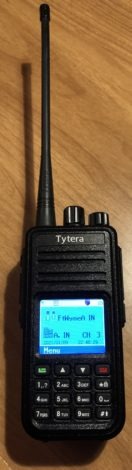
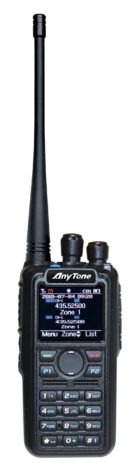
In 2025, Fujian Baofeng Electronics Co., Ltd. invited me to write a series of posts for the blog on the company’s website about how to program its DM-32UV handheld DMR radio. I wrote seven posts, links to which appear below.
Programming the Baofeng DM-32UV Part Six: Key Assignments. Note: This post was based on CPS version 1.41. In versions 1.45 and 1.60, Baofeng removed the ability to configure side key 2. Also, firmware version DM32.01.L01.048 has an issue that causes the radio to ignore programmable keys while it is receiving a signal.
This evening, I spoke to the Whitley County Amateur Radio Club about digital mobile radio (DMR). Here is a link to my presentation slides for reference:
I have created a guide to help users of the Anytone AT-D878UV handheld, DMR amateur radio create codeplugs for their radios.
The link below will provide the latest version of the document, which I have updated since publishing the original version. Version 2.65, uploaded January 29, 2023, adds advice on matching the CPS version to the firmware version.
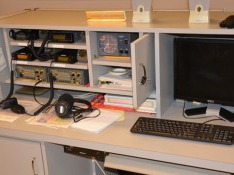
Restrictions implemented to slow the spread of COVID-19 will affect one of the ways SKYWARN® storm spotters send reports to local National Weather Service (NWS) offices. Many NWS weather forecast offices (WFOs) have amateur (ham) radio equipment permanently installed. During severe weather events, volunteer ham radio operators operate that equipment to receive reports of tornadoes and other dangerous weather from fellow hams who are storm spotters.
Now, however, the NWS is forbidding anyone not directly connected with the agency from entering WFOs, according to NWS Northern Indiana warning coordination meteorologist Michael Lewis. That means that ham radio stations at WFOs are less likely to be on the air during severe weather events. Some NWS meteorologists have ham radio licenses and some of those might be able to sporadically operate WFO ham stations. But Lewis told me that to reduce exposure to disease, the NWS is trying to operate WFOs with as few people in the office as possible. This might mean that NWS meteorologists who have ham licenses will have no time to operate the ham radio equipment.
Ham radio operators will still be able to use their radios to report severe weather, but they’ll need someone other hams to relay those reports to their local WFOs. That’s where an internal NWS text chat system will be essential, Lewis said. The system is called NWSChat and access is limited a select population. That groups includes ham radio operators who serve as net control station operators. Local ham radio SKYWARN groups can (and should) designate such leaders to serve as liaisons between the radio networks and NWSChat.
Whether or not spotters have ham radio licenses, other ways to communicate reports continue to be available, including telephone calls to WFOs and Twitter tweets that include the appropriate WFO’s Twitter handle.
The voice communication app Zello can also be helpful to SKYWARN storm spotters. Unfortunately, Zello’s terms and conditions do not comply with federal government requirements, so NWS WFOs are prohibited from installing Zello on any government-owned devices. A specific Zello channel exists (“IWX SKYWARN”) for reports from areas covered by the Northern Indiana office. Because WFO staff are prohibited from using Zello, ham radio net control station operators, who have NWSChat accounts, plan to monitor the Zello channel as much as possible, to relay reports from spotters to the WFO.
All this could be tested tomorrow, March 19, when severe weather is forecast in much of Indiana.
Speakers to include meteorologists from four TV stations
Collaborating for public safety: Meteorologists from four competing Fort Wayne TV stations meet with ARES leaders to help plan storm spotter education. Counterclockwise from lower left: Jim Moehring, ARES emergency coordinator; Caleb Saylor, Fox 55 Weekend Meteorologist; Nicholas Ferreri, WANE 15 Chief Meteorologist; Jon Wilson, Fort Wayne’s NBC Weekend Meteorologist; Caleb Chevalier, ABC21 Weekend Morning Meteorologist. Photo by Jay Farlow, ARES Assistant Emergency Coordinator
Jan. 25, 2019 – Fort Wayne – A local organization invites anyone who is interested in weather to attend a free class on how to recognize and report severe weather phenomena to benefit public safety. The Allen County branch of the national Amateur Radio Emergency Service® (ACARES) will host the class at the Allen County Public Library, 900 Library Plaza, Fort Wayne, Thursday, Feb. 21 at 6:30 p.m. Scheduled speakers include meteorologists from ABC21, Fort Wayne’s NBC, Fox 55 and WANE 15. Allen County Office of Homeland Security director Bernie Beier and Consolidated Communications Partnership deputy director John Chavez also plan to speak.
“This two-hour class will provide attendees the knowledge they need to help protect their communities from severe weather like tornadoes,” said Jim Moehring, emergency coordinator (team leader), ACARES. “Although we are a ham radio organization, people need not be hams to be storm spotters, so we welcome anyone who is interested in weather.”
Moehring said the “ground truth” that volunteer spotters provide is essential to the process through which the National Weather Service (NWS) issues storm warnings. He pointed out that this remains true despite advances in weather radar, because the beam from the NWS radar site near North Webster is 2,500 feet or more above the ground by the time it reaches Allen County.
Traditionally, meteorologists from the NWS Northern Indiana office near North Webster have presented spotter training every spring in Fort Wayne. Changes in the office’s responsibilities, however, led it to change its training schedule. As a result, NWS meteorologists won’t be in Fort Wayne until autumn of 2019 and then not again until spring of 2021.
“We wanted to assure that our members, and members of the general public have a chance to receive storm spotter education before this spring’s severe weather season,” Moehring said. “We therefore decided to devote our February meeting to a spotter class and to invite everyone to attend. Because NWS meteorologists aren’t available, we’re thrilled that four TV stations in Fort Wayne are sending meteorologists to help teach the weather-related material.”
A complete list of speakers and their topics follows:
Jim Moehring, Allen County ARES emergency coordinator (team leader): Introduction to the NWS SKYWARN program and the importance of volunteer storm spotters.
Jay Farlow, ACARES assistant emergency coordinator for SKYWARN: How storm warnings are issued and distributed. Also, storm spotter reporting methods and best practices.
Charles Ward, experienced storm spotter: Best practices to remain safe while storm spotting.
Bernie Beier, Allen County Office of Homeland Security director: The role of the Allen County Office of Homeland Security with regard to severe weather.
John Chavez, Consolidated Communications Partnership deputy director: The role of the Consolidated Communication Partnership (911/dispatch) in severe weather events.
Caleb Saylor, Fox 55 weekend meteorologist: Thunderstorm basics, including how storms form and become severe.
Caleb Chevalier, ABC21 weekend morning meteorologist: Types of thunderstorms, including those most likely to create tornadoes. Also, radar apps and interpretation
Jon Wilson, Fort Wayne’s NBC weekend meteorologist: Thunderstorm hazards, including straight-line winds, large hail, flash flooding and tornadoes.
Nicholas Ferreri, WANE 15 chief meteorologist: Cloud identification, including distinguishing scary-looking but benign weather from true threats that spotters should report.
About the Amateur Radio Emergency Service
The Amateur Radio Emergency Service® (ARES) is a program of ARRL, the national association for amateur radio®. ARES establishes teams of volunteer, licensed amateur (ham) radio operators in counties throughout the country, each of which is led by an emergency coordinator. These volunteer teams train and practice to provide communication services to their communities in the event of a disaster. Through a memorandum of understanding signed by ARRL and the National Weather Service (NWS), ARES volunteers also commit to communicating weather information that assists the NWS in the creation of weather warnings. In addition, ARES volunteers practice their communication skills by providing two-way radio communications at public events, such as marathons, walk-a-thons, etc. More information about ARES is available on the ARRL website at http://www.arrl.org/ares.
Media Contact
Jay Farlow, volunteer public information officer, ARRL arsw9lw@gmail.com
This blog’s author, Jay Farlow, W9LW, joining the WeatherBrains podcast Jan. 7, 2019, via Google Hangouts from his office/radio shack at home in Fort Wayne, Indiana.
A popular, weather-related podcast recently recorded an episode devoted to the role of amateur (ham) radio in the weather enterprise, especially storm spotting. WeatherBrains is a long-running, well-respected podcast hosted by Alabama broadcast meteorologist James Spann. It recorded the ham radio podcast January 7.
Ham radio has been deeply involved in the National Weather Service’s (NWS) SKYWARN® program since its inception, according to research done by Brian E. Smith, the warning coordination meteorologist at the NWS Omaha/Valley weather forecast office (WFO) in Nebraska. During the infamous Palm Sunday tornado outbreak of 1965, a tornado did F4 damage in northern Toledo, Ohio. Afterward, a ham who was also a meteorologist in the Toledo office of what was then called the U.S. Weather Bureau — Merle Kachenmeister, WA8EWW — organized ham radio operators in his area to report severe weather to the Toledo office via radio. This is considered the birth of the SKYWARN program, according to Smith.
WeatherBrains episode number 677 is available for viewing or listening on the the podcast’s website. Listeners can also access the audio-only version on their mobile devices via their favorite podcast apps.
The author of this blog was one of the guests who WeatherBrains invited to discuss ham radio. Other guests included Jeff Stapel, W8SWX of the Muskegon, Michigan SKYWARN organization and Rob Macedo, KD1CY, who is both the Section Emergency Coordinator of the ARRL Eastern Massachusetts section and director of operations for the VOIP Hurricane Net.
During the show, I mentioned several resources that might be valuable to audience members. For your convenience, I’ve listed them below:
The tornado outbreak of Aug. 24, 2016: This page on the website of the NWS northern Indiana WFO includes the radar rotation tracks I showed during the podcast, as well as other information about how the outbreak affected my home area.
ARRL Ham Radio License Manual: This book contains all the information you need to pass the exam and get your ham radio license, so you can join other storm spotters on the air.
Storm Spotting and Amateur Radio: This book is a valuable resource for anyone who is interested in either storm spotting or how to use ham radio while spotting. It includes information on resources, training, equipment, safety, storm spotter activation procedures and more.
Allen County (Ind.) SKYWARN Net Operations Manual: This PDF document discusses in great detail how the hams of the Fort Wayne and Allen County, Indiana area organize their SKYWARN net — i.e. on-air conference call — during severe weather events.
A couple resources I didn’t have time to get into regard equipment (although Rob mentioned some price ranges). Below are links to some equipment options you might consider, if you’re thinking about getting into ham radio:
Baofeng UV-5R handheld radio: Available on Amazon for only $25, this will get you on the air. Like any handheld radio, its geographical range is limited, but as long as you’re close enough to what hams call a “repeater” station, you can talk to people dozens of miles away.
AnyTone AT-778UV Mobile radio: Available on Amazon for $130, this radio mounts in your vehicle and connects to your vehicle’s 12-volt poser source. It transmits with 25 watts, versus the 5 watts of most handheld radios, enabling you to communicate while farther from the repeater station. It requires an external antenna, sold separately. Antenna options include those with temporary magnetic mounts and those that can mount more permanently on a trunk lid without drilling holes.
The “big three” brands of ham radio equipment are Icom, Kenwood and Yaesu. Their radios, while well respected, tend to be priced higher on the new market than the Chinese brands above. Note, however, that there’s a large market for pre-owned radios. These can be obtained through some dealers (who take trade-ins), at ham radio flea markets and through online auction sites.
Anyone can help protect their community from weather threats like tornadoes. In just a couple of hours, you can learn how severe weather forms, how to distinguish truly threatening weather from scary-looking but harmless clouds, and how to report severe weather so the rest of your community can be adequately warned.
The Allen County chapter of the Amateur Radio Emergency Service (ARES) invites all interested persons to attend its Feb. 21 meeting, from 6:30 to 8:30 p.m., at the main, downtown branch of the Allen County Public Library, The meeting will be devoted to severe weather and storm spotting. You don’t have to be a ham radio operator and you don’t need any prior knowledge of meteorology or communications.
Scheduled speakers include ABC21 Weekend Morning Meteorologist Caleb Chevalier, WANE 15 Chief Meteorologist Nicholas Ferreri, FOX 55 weekend Meteorologist Caleb Saylor, Fort Wayne’s NBC Weekend Meteorologist Jon Wilson, Allen County Office of Homeland Security director Bernie Beier, Consolidated Communications Partnership (911/public safety dispatch) director David Bubb, Allen County ARES team leader Jim Moehring and Allen County SKYWARN ham radio net manager Jay Farlow.
Although representatives of the National Weather Service (NWS) are not available for this meeting, we will follow the NWS SKYWARN curriculum with enhancements specific to Allen County. NWS does not plan to teach a spotter class in Allen County until autumn of 2019.
This meeting will be valuable to anyone who is interested in severe weather, including those who have previously received storm spotter training. More information is available on the host’s Facebook page.
Tonight, I was the guest speaker at a meeting of the Allen County Amateur Radio Technical Society on the topic in the title above. I promised the members present that they would not have to write down all the web URL’s I mentioned, because i’d post them here. Each item in the bulleted list below links directly to the respective online resource.